

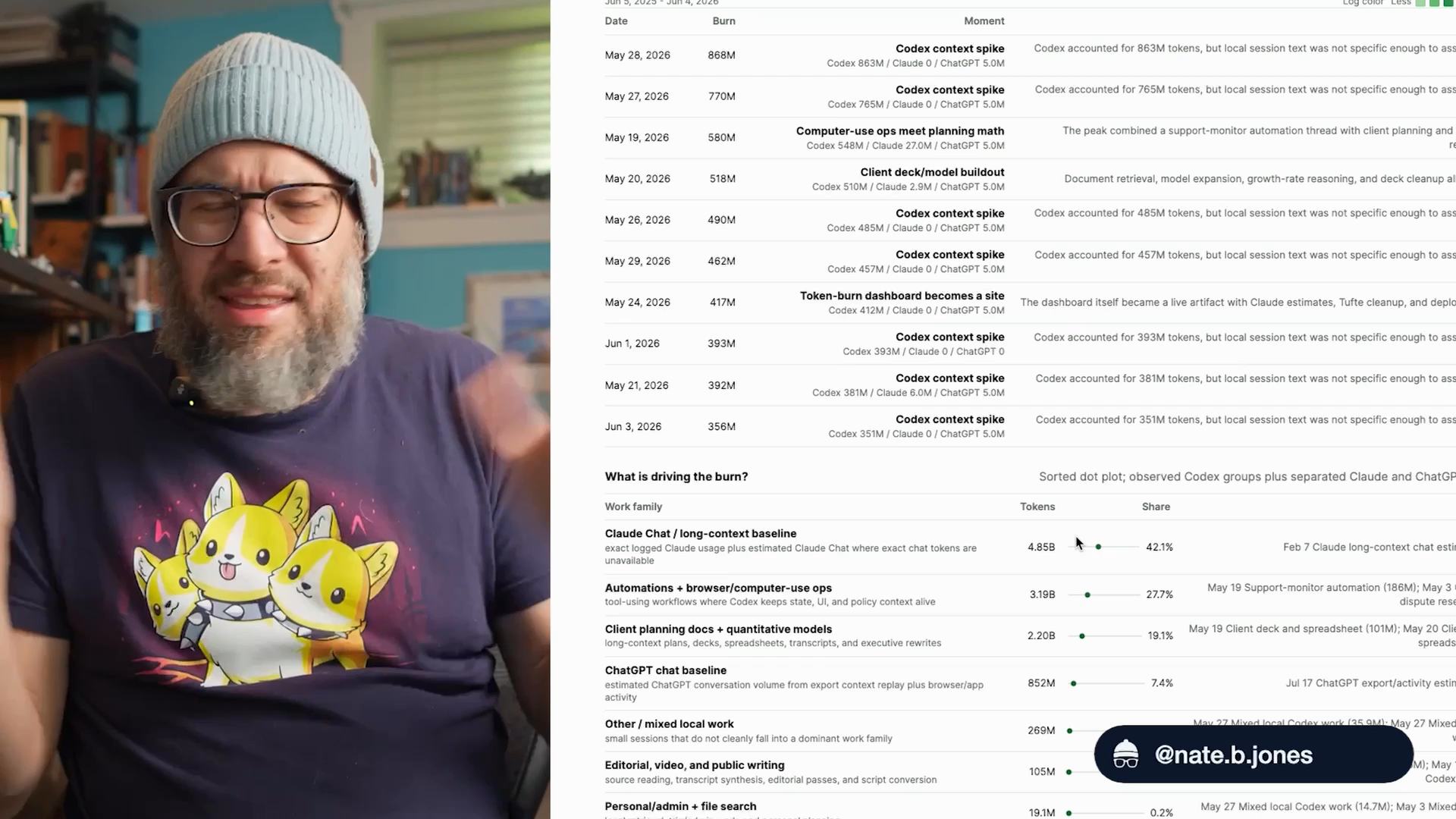


As of this writing, the biggest single day I have ever run through Codex is north of 860 million tokens, counted exactly. By the time you read this the number will be higher, because I keep giving the computer more to do.
You could read that as a brag. It is the least useful thing the number can tell you.
A token count is not a scoreboard. It is a trace. It shows where you handed work to AI, how much delegated intelligence you spent doing it, and whether your behavior is actually changing. Tie that trace to outcomes and it stops being a cost chart or a status flex and turns into something better: a feedback loop for what your computer should do next. That is the whole reason to build one.
That record day was not a day of asking for more paragraphs. It was a day when more of my work surface moved through agents: files, browser sessions, drafts, local tools, source notes, checks, revisions, automations, and several threads each carrying part of something real.
The stake here is bigger than my token count. The models keep getting better and the tools keep getting broader, but a lot of capable people cannot feel it, because their own usage settled into a groove a year ago. If your picture of AI is still “ask a question, get an answer,” you will keep leaving the most valuable work on the table without noticing.
They ask for a paragraph when they could ask for a full draft. They ask for a summary when they could ask for decisions, owners, and the follow-up note. Then they look at what comes back and call AI useful but not transformative. Of course it feels that way. They gave it assistant work. They never gave it computer work.
A dashboard is how I catch that gap in myself. It does not make me better at using AI any more than a fitness tracker makes you healthy. What it gives me is the loop: a way to see whether AI is expanding what I can do or just making the same old work a little faster. That is why I built it.
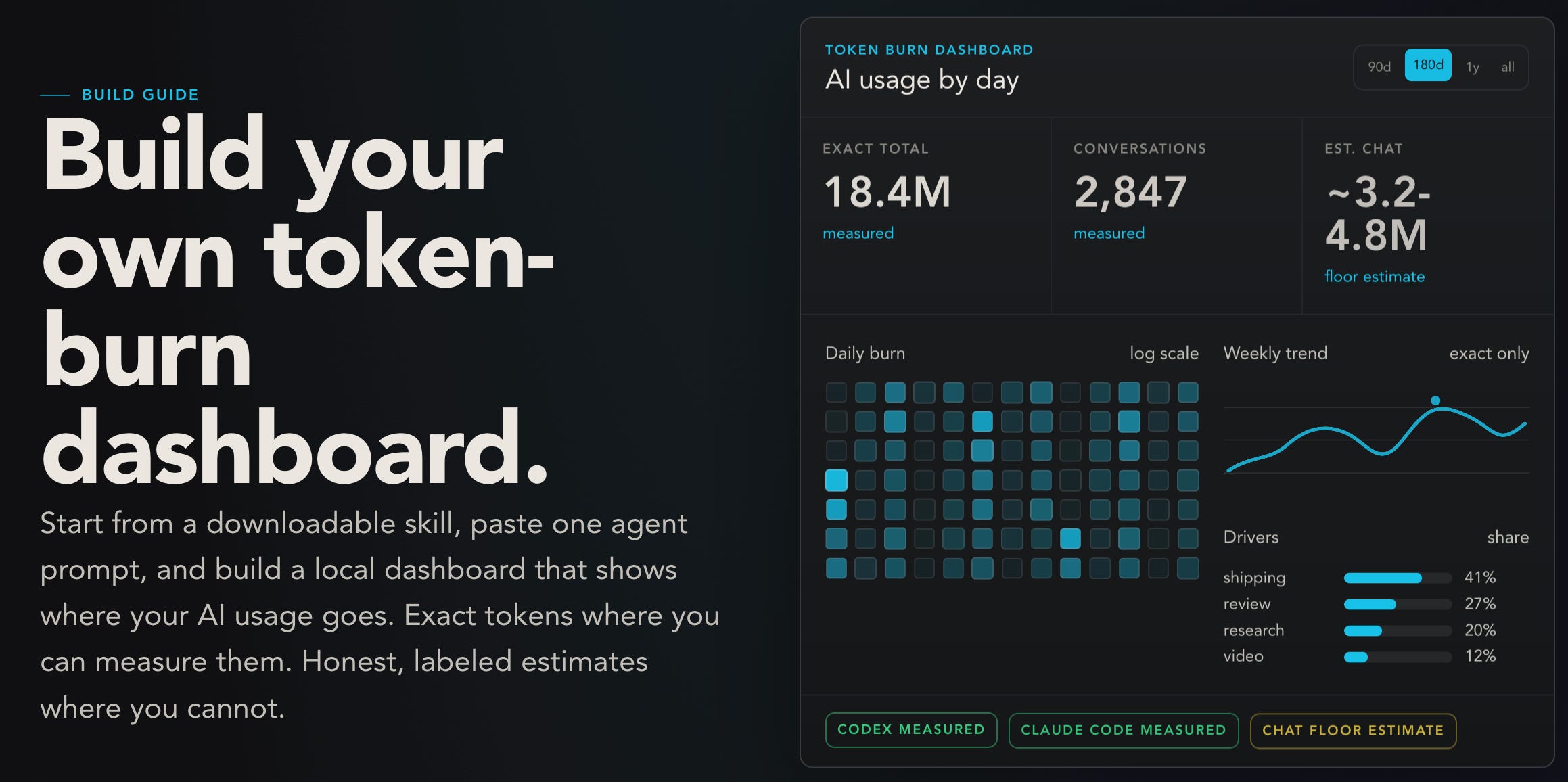
You can poke at the live version here: the beta dashboard. This is the one I originally built last week, running on my own usage. The version in the guide is an improved build of it, but I am leaving this one up for reference.
Here is what is inside:
Build your own token dashboard from scratch, with a step-by-step walkthrough, the prompt I used, and a full build video over in the guide.
Start from a ready-made kit for your stack instead of a blank page, whether you live in Codex, Claude, ChatGPT, or all of them at once.
The line between assistant work and computer work, and why being stuck on the wrong side has nothing to do with the model.
Five rules for reading your chart, including why a quiet stretch can be a worse sign than your biggest spike.
A fifteen-minute weekly review that turns your best one-off runs into workflows you stop rebuilding.
Why ranking a team by token volume backfires, and the record that actually shows who can lead an AI rollout.
Listen to this episode with a 7-day free trial
Subscribe to Nate’s Substack to listen to this post and get 7 days of free access to the full post archives.


